Why Is My Boiler Leaking Water?
This guide explains the most common reasons a boiler leaks, what you can safely do straight away and when you need a Gas Safe registered engineer.
Quick Answer
Most boiler leaks are caused by a pressure relief valve releasing water because the system pressure is too high, a failing expansion vessel, a worn pump seal, corroded pipework or joints, or a problem with the condensate pipe. Switch the boiler off, contain the water and call a Gas Safe registered engineer. Do not remove the boiler casing or attempt repairs inside the boiler yourself.
What should you do if your boiler is leaking?
- Turn the boiler off. Use the boiler controls or the switch next to the boiler, as long as it is dry and safe to reach.
- Keep water away from electrics. If water is near sockets or the boiler's electrical supply, switch off that circuit at the consumer unit if you can do so safely.
- Contain the water. Place a bowl or towels underneath and move anything that could be damaged.
- Turn off the stopcock if the leak is heavy. If water is coming from pipework on the mains supply, this will stop the flow.
- Check the pressure gauge. Make a note of the reading so you can pass it on to the engineer.
- Book a repair. Even a slow drip is worth getting checked before it gets worse.
If you can smell gas at any point, call the National Gas Emergency Service on 0800 111 999 straight away, open windows and doors, and avoid using electrical switches or naked flames.
Why is water dripping from a pipe outside?
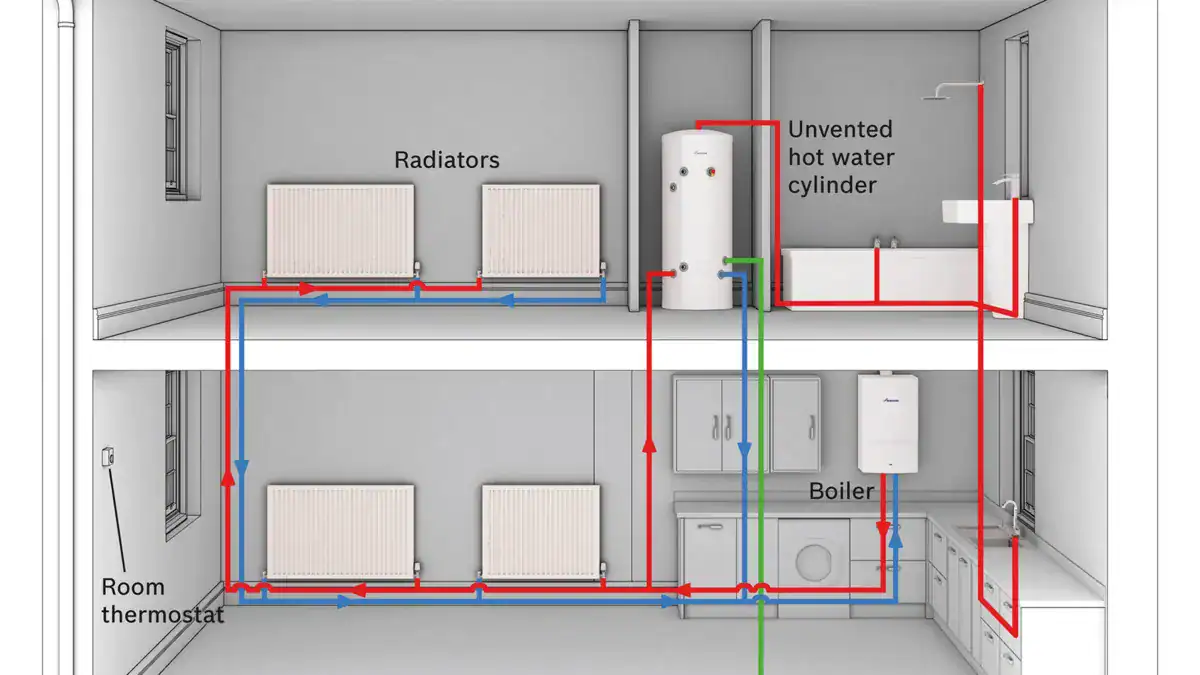
Most boilers have a pressure relief valve that releases water when the system pressure gets too high, usually at around 3 bar. The water runs through a copper discharge pipe, which often leaves the property through an outside wall.
If this pipe is dripping, the valve is doing its job, but something is pushing the pressure too high. Common reasons are a faulty expansion vessel or a filling loop that has been left open or is letting water through. Once a relief valve has opened, it may not reseal properly and can carry on dripping, so it often needs replacing at the same time as the underlying fault is fixed.
What are the most common causes of a boiler leak?
High system pressure
Most sealed heating systems run at around 1 to 1.5 bar when cold, rising a little when the heating is on. If the system has been overfilled when topping up, or water is creeping in through the filling loop, the pressure can climb high enough to make the relief valve discharge.
A faulty expansion vessel
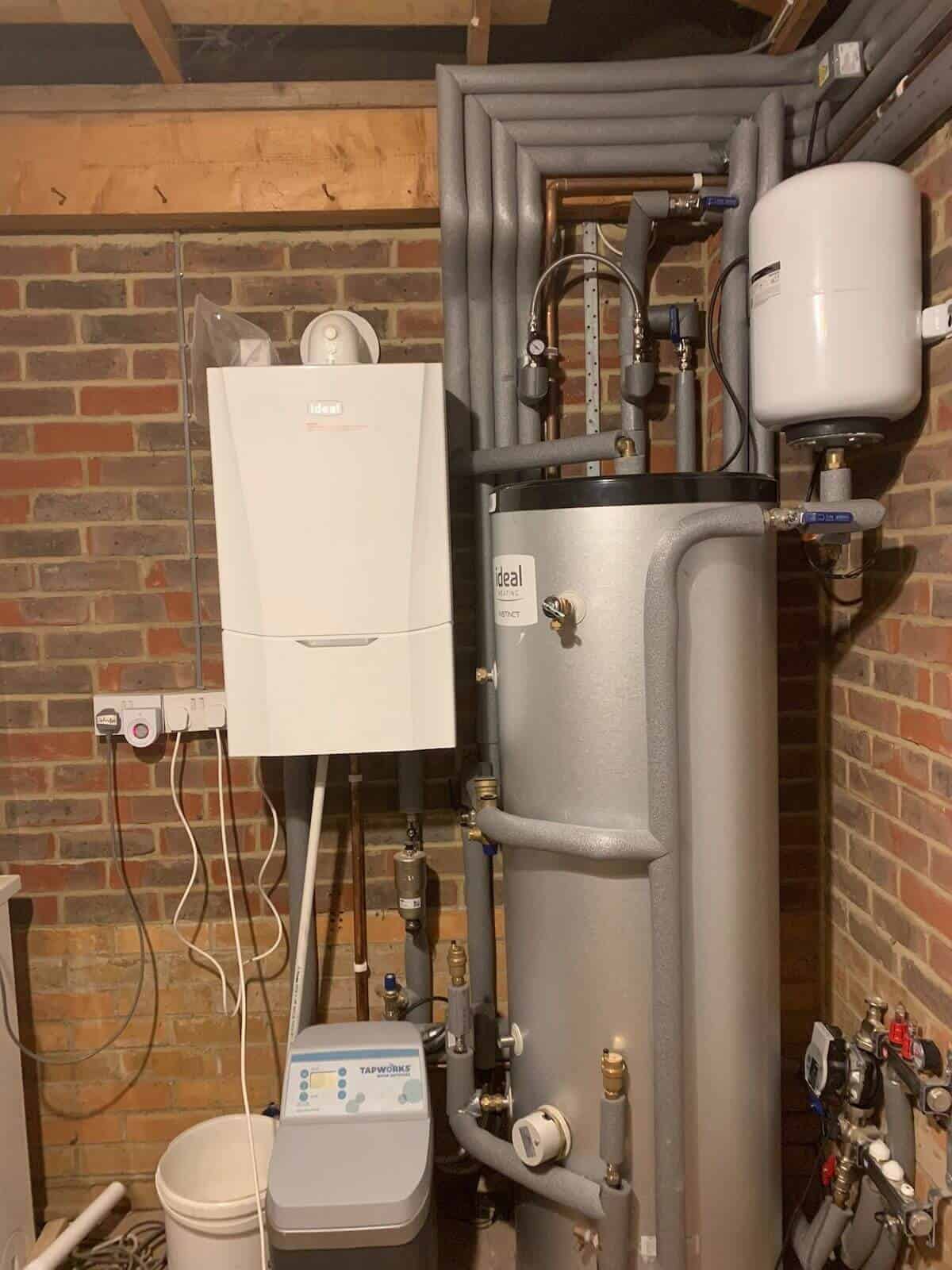
Water expands as it heats, and the expansion vessel absorbs that extra volume. If the vessel loses its air charge, the pressure jumps when the heating comes on, water escapes through the relief valve and the pressure then drops when the system cools. This often shows up as a boiler that needs repressurising again and again. Our guide on why boiler pressure keeps dropping covers this in more detail.
Corroded pipes and joints
Over time, corrosion inside a heating system can cause pinhole leaks in pipework and weeping joints. Corrosion often goes hand in hand with sludge, which also causes cold spots on radiators. Where sludge is part of the problem, a power flush may be recommended once any leaks have been repaired.
A worn pump seal
The pump circulates water around your radiators. Its seals can wear with age, allowing water to seep out around the pump, which may sit inside the boiler or on the pipework nearby.
A leaking heat exchanger
The heat exchanger transfers heat from the burner to the water. Corrosion or limescale can eventually cause it to leak. This is one of the more serious causes, and on an older boiler it may make replacement better value than repair.
Condensate pipe problems
Modern condensing boilers produce mildly acidic water, which drains away through a plastic condensate pipe. Leaks can appear at loose joints, and in freezing weather an external condensate pipe can freeze, causing the boiler to stop working. Our article on frozen condensate pipes explains how to help prevent this.
Loose connections
The fittings beneath the boiler can loosen slightly as pipework heats and cools. A small weep from a joint is often a simple fix, but it should still be checked by an engineer.
Is a leaking boiler dangerous?
Water itself is not usually dangerous, but a leak near electrical components can damage the boiler and cause it to fail. Ongoing leaks can also corrode parts inside the boiler, and a leak can be an early sign of a fault that will soon stop your heating working altogether.
Any work inside a gas boiler must be carried out by a Gas Safe registered engineer, so this is not a job to attempt yourself.
Should you repair or replace a leaking boiler?
Most leaks can be repaired. Valves, seals, expansion vessels and fittings can usually be replaced without major expense or disruption. If the heat exchanger has failed on an older boiler, or the boiler has a history of faults, replacing it may be the better long-term option.
Our engineers will explain what they have found and talk you through the options before any work is carried out. If your boiler is getting on in years, our guide to the signs a boiler may be reaching the end of its life can help, and you can find out more about our new boiler installation service.
How can you reduce the risk of a boiler leak?
- Have your boiler serviced every year. An annual boiler service includes checks on seals, system pressure and the expansion vessel, so problems can be picked up early.
- Keep an eye on the pressure gauge. Needing to top up the pressure regularly is not normal and is worth reporting.
- Protect external condensate pipes. Insulation and correct pipe sizing help prevent freezing in cold spells.
- Keep the system water clean. Inhibitor and a magnetic filter help reduce corrosion and sludge.
Frequently asked questions
Is it safe to keep using a leaking boiler?
It is best to switch the boiler off and have it checked. Small drips can get worse quickly, and water reaching electrical parts can cause further damage.
Why does my boiler only leak when the heating is on?
As the system heats up, the water expands and the pressure rises. If the expansion vessel has failed or a joint is weak, the extra pressure can force water out, often through the pressure relief valve.
Can I fix a boiler leak myself?
You can safely contain the water, check the pressure gauge and, if your boiler's instructions allow, top up the pressure using the filling loop. Anything inside the boiler casing, or involving gas, must be left to a Gas Safe registered engineer.
How much does it cost to fix a leaking boiler?
It depends on the cause and the parts needed. A loose joint is very different from a failed heat exchanger. Our engineers will diagnose the fault and explain the cost before carrying out any boiler repair.
Does boiler cover include leaks?
It depends on the plan, so check what your cover includes. You can compare our boiler cover plans for homeowners and landlords.
Need help with a leaking boiler?
If your boiler is leaking, losing pressure or dripping from the pipe outside, it is worth getting it checked before the colder weather sets in. Plumbox repairs gas, LPG, oil and electric boilers across Cambridge and Cambridgeshire.
Contact the Plumbox team or call 01223 867038 to arrange a boiler repair.