Is Hard Water Damaging Your Boiler and Plumbing? A Cambridge Homeowner's Guide
Quick Answer
Yes, hard water can shorten the life of a boiler, cylinder and pipework. Dissolved calcium and magnesium come out of solution when water is heated and form limescale on heat exchangers, immersion elements and inside pipes. This reduces efficiency, restricts flow and can lead to premature failure. Many boiler manufacturers require scale protection in hard water areas as a condition of warranty. A scale reducer, a water softener or both will protect the system, and the right choice depends on the property and how the hot water is produced.
Why is Cambridge water so hard?
Water hardness is determined by geology rather than by anything the water company does.
Cambridge and much of Cambridgeshire draw water from a chalk aquifer. As rainwater passes through chalk it dissolves calcium and magnesium carbonate, and those minerals stay in the supply that reaches your home. The water is perfectly safe to drink and the minerals are harmless to health. They simply do not stay dissolved once the water is heated.
Hardness does vary slightly between supply zones, so it is worth checking the figure for your own postcode on Cambridge Water's website rather than assuming a single value for the whole area.
How does limescale actually form?
Understanding the mechanism explains why the damage concentrates where it does.
When hard water is heated, the dissolved calcium carbonate becomes less soluble and deposits on the nearest hot surface. The higher the temperature, the faster this happens, which is why the worst scaling occurs on the components that get hottest rather than being spread evenly through the system.
This is also why scale is a hot water problem rather than a general plumbing one. Your cold supply pipework is far less affected than the heat exchanger inside your boiler.
What does hard water do to a boiler?
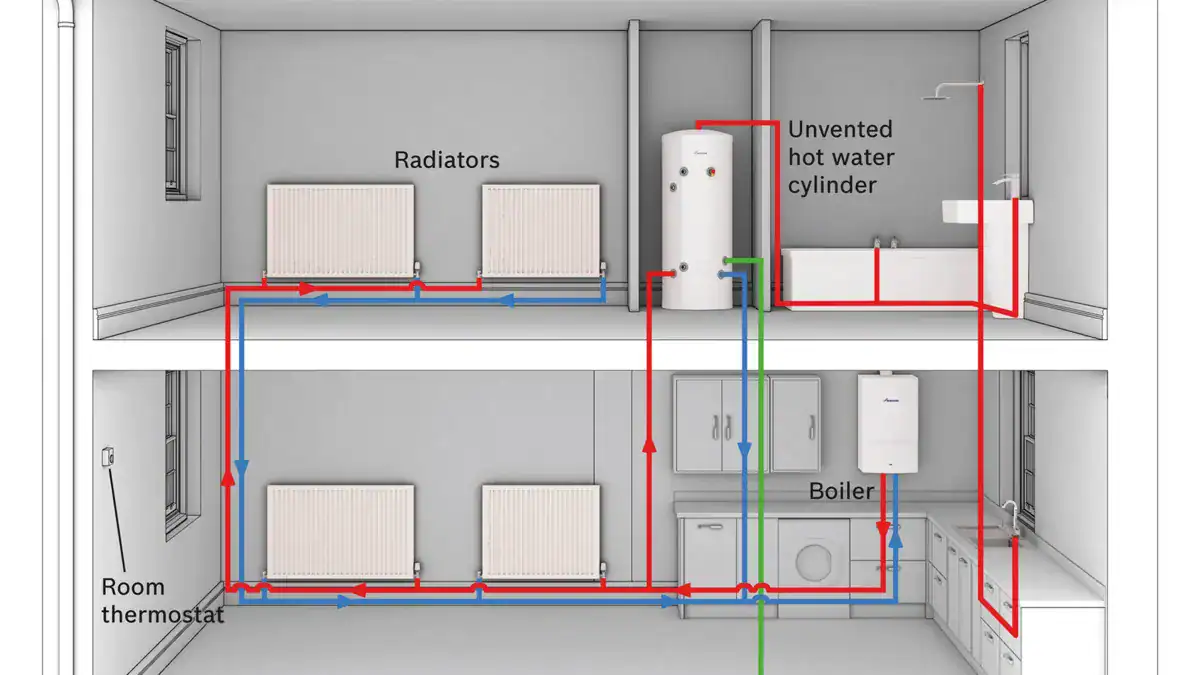
In a combi boiler, the plate heat exchanger heats mains water on demand. It has narrow waterways and it runs hot, which makes it the single most vulnerable component in a hard water area.
As scale builds up it acts as an insulating layer between the flame and the water. The boiler has to work harder and burn more gas to reach the same temperature, so efficiency drops. Restricted waterways also reduce hot water flow, which usually shows up as a shower that has gradually weakened over a year or two.
The noise many homeowners describe as kettling is another symptom. Water trapped beneath scale deposits overheats and turns to steam, producing banging or rumbling from the boiler. Left long enough, the result is commonly a heat exchanger replacement or, in some cases, a new boiler installation earlier than would otherwise have been necessary.
What about cylinders, taps and appliances?
The boiler is the most expensive casualty but it is not the only one.
Hot water cylinders. Scale settles on immersion heater elements and on the internal coil, reducing heat transfer and lengthening reheat times. An unvented cylinder depends on good flow and efficient heat transfer, so scale affects performance noticeably.
Pipework. Scale narrows the internal bore of hot pipework over time, which reduces flow rates and increases the load on pumps.
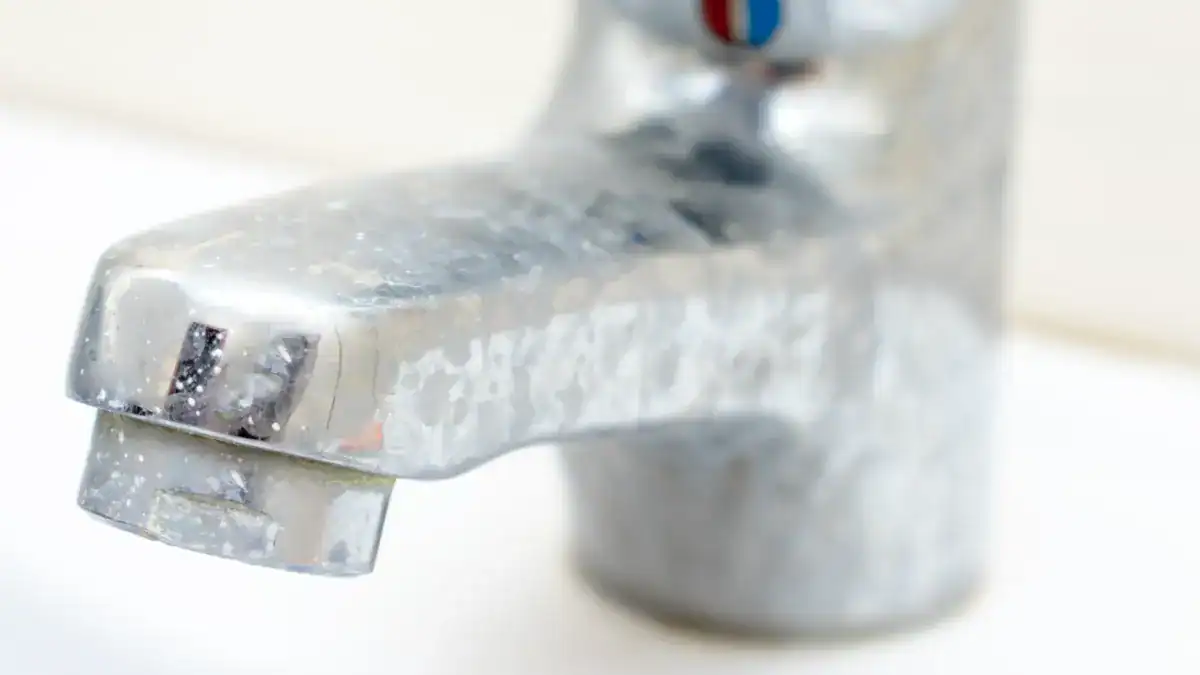
Taps, showers and valves. Thermostatic shower valves and mixer cartridges are particularly prone to seizing. Blocked shower heads and dripping taps are often scale rather than wear.
Appliances. Washing machines, dishwashers and kettles all scale up, and appliance manufacturers frequently identify limescale as a cause of premature failure in hard water areas.
Could hard water affect your boiler warranty?
This is the point most homeowners are unaware of, and it can be an expensive discovery.
Several major manufacturers set out requirements for installations in hard water areas within their warranty terms. These commonly include fitting a scale reduction device on the cold water supply, and in some cases specify a water treatment standard the installation must meet. Where those conditions have not been met, a warranty claim relating to a scaled heat exchanger may be refused.
As accredited installers for Worcester Bosch, Vaillant and Ideal, we install to each manufacturer's requirements for this area as standard. If you have an existing boiler and are unsure whether scale protection was fitted, it is worth checking your paperwork or asking us to look during a service.
Scale reducer or water softener?
These are different products solving overlapping problems, and the right answer depends on what you want to protect.
A scale reducer is a compact inline device fitted to the cold supply, typically feeding the boiler. It conditions the water so that minerals are less likely to form hard deposits, without removing them. It is relatively inexpensive, needs little maintenance and is often what a manufacturer's warranty requires. It protects the appliance rather than the whole house.
A water softener treats the entire incoming supply, removing calcium and magnesium through ion exchange. It protects the boiler, cylinder, pipework, taps, showers and appliances together, and homeowners usually notice softer water for washing and less cleaning. It costs more, needs a suitable location with a drain connection, and requires salt to be topped up.
Many Cambridge homes end up with a softener for the whole property and a scale reducer on the boiler feed. Our water softener page explains the options in more detail.
What if scale has already built up?
Existing scale can often be addressed, though the approach depends on where it has formed.
A chemical descale can sometimes recover a partially scaled heat exchanger, and this is usually attempted before replacement where the boiler is otherwise sound. Heavily scaled exchangers generally need replacing.
It is worth separating two problems that are often confused. Limescale is a hot water side issue caused by minerals in the mains supply. Sludge and magnetite are a heating circuit issue caused by corrosion inside radiators and pipework, and they are dealt with by powerflushing and a magnetic system filter. A property in Cambridge may well have both, but they need different solutions and a filter alone will not protect against scale.
An annual boiler service is the practical way to catch either early, because an engineer will notice reducing flow rates or the early signs of kettling before they become a repair.
What can you do without spending anything?
A few habits reduce the rate of scale formation, though they will not eliminate it:
- Lower the hot water temperature slightly. Scale forms faster at higher temperatures, so reducing the setting can slow it, provided you stay within safe limits for stored hot water.
- Descale visible fittings regularly. Shower heads, tap aerators and kettles are easy to treat and give you an indication of how quickly scale is forming.
- Keep up annual servicing. Scale-related problems are far cheaper to address early.
- Check the paperwork on any new appliance. Some manufacturers set hardness requirements or recommend treatment.
None of these replace proper scale protection, but they help in the meantime.
Frequently asked questions
Is hard water bad for your health?
No. The calcium and magnesium that make water hard are naturally occurring minerals and the supply is safe to drink. The issue is entirely about what happens to those minerals when the water is heated inside your plumbing.
Will a magnetic filter stop limescale?
No. A magnetic filter captures magnetite and corrosion debris circulating in the heating system. It does an important job, but it sits on the heating circuit rather than the incoming mains and does not address limescale in the hot water side. The two problems need different solutions.
How do I know if my boiler is scaled?
Common signs include banging or rumbling noises when the boiler fires, hot water flow that has gradually weakened, water that takes longer to run hot, or heating bills that have crept up without an obvious cause. An engineer can check flow rates during a service.
Does a water softener remove the need for a scale reducer?
Often, but not always. Some manufacturers specify a particular form of protection on the boiler feed regardless of whole-house treatment, so it is worth checking the warranty terms for your specific model rather than assuming.
Can you fit a water softener in any house?
Most homes can accommodate one, but it needs a suitable position near the incoming main with access to a drain and a power supply. Under the kitchen sink is common. We can assess the options during a visit.
Do you cover villages outside Cambridge?
Yes. We work throughout Cambridge and the surrounding areas, and the water in most of those villages comes from the same chalk aquifer. You can check coverage on our areas we cover page.
Is your system protected against hard water?
Hard water in Cambridge is not going away, but the damage it causes is largely preventable. Scale protection costs a fraction of a heat exchanger replacement, and in many cases it is a condition of your boiler warranty rather than an optional upgrade.
If you are not sure whether your system has any protection fitted, or you have noticed weakening hot water flow or noise from the boiler, it is worth having it checked before winter.
Plumbox provides plumbing and heating services in Cambridge, including water softener installation, scale protection, boiler servicing and system upgrades. Contact the Plumbox team or call 01223 867038 to discuss your property and arrange a quote.